
The intensity of noise is expressed as a sound pressure level in decibels. The decibel is a logarithmic scale, which means that each rise of ten decibels in sound pressure approximately doubles the perceived loudness while increasing the sound power tenfold. Owing to this characteristic, the actual difference between 30 and 60 decibels is considerably greater than the figures suggest.
To align with the response of the human ear, acoustic measurements commonly apply A weighting, denoted as dB(A). This weighting adjusts the signal according to the ear’s sensitivity at each frequency and therefore provides a more accurate representation of perceived noise levels. Typical reference values are as follows: a quiet bedroom is approximately 30 decibels, normal conversation approximately 60 decibels, and a busy street approximately 80 decibels. Prolonged exposure above 85 decibels may result in hearing damage.
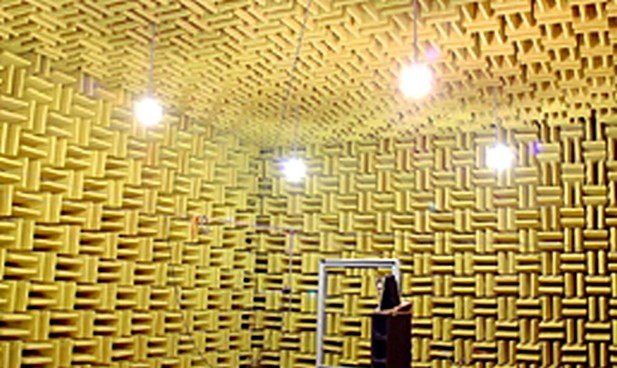
In industrial and product testing, faint acoustic signals frequently must be measured against a very low background, and this is precisely where anechoic chambers, soundproof rooms, and silent boxes prove essential. A well engineered acoustic laboratory can reduce the background noise to between 20 and 30 decibels, allowing the acoustic characteristics of the product under test to be resolved clearly.