
Products
Reverberation Chamber
A fully reflective diffuse field laboratory for measuring the absorption coefficient, sound power and acoustic performance, with a common volume of 70 to 300 cubic meters.
Specifications
| Volume | 70 to 300 cubic meters |
|---|---|
| Lowest test frequency | 100 to 125Hz |
| Average absorption | No more than 0.06 |
Key Features
- Fully reflective diffuse field with uniform energy density
- Irregular proportions so that no two dimensions form a whole number ratio
- Hard reflective walls finished in enamel, tile or copper foil
- Fitted with fixed diffuser panels and large rotating diffusers
Overview
A Reverberation Chamber reflects sound energy at every boundary and allows the field to diffuse fully within the room, so that the energy density is uniform throughout and the sound is distributed randomly in all directions. It is used principally to measure the absorption coefficient of materials, to measure sound absorption in air, to characterize the sound power and spectrum of sources and machinery, to evaluate the efficiency of electroacoustic devices, and to conduct noise fatigue testing on precision components.
The common volume is 70 to 300 cubic meters, with a standard chamber positioned at approximately 200 cubic meters within a tolerance of 10%. The lowest test frequency is 125Hz for one octave bands or 100Hz for one third octave bands, reverberation times range from a few seconds to tens of seconds, the average absorption coefficient remains no greater than 0.06, and the standard deviation of sound pressure across measurement points remains below 1dB.
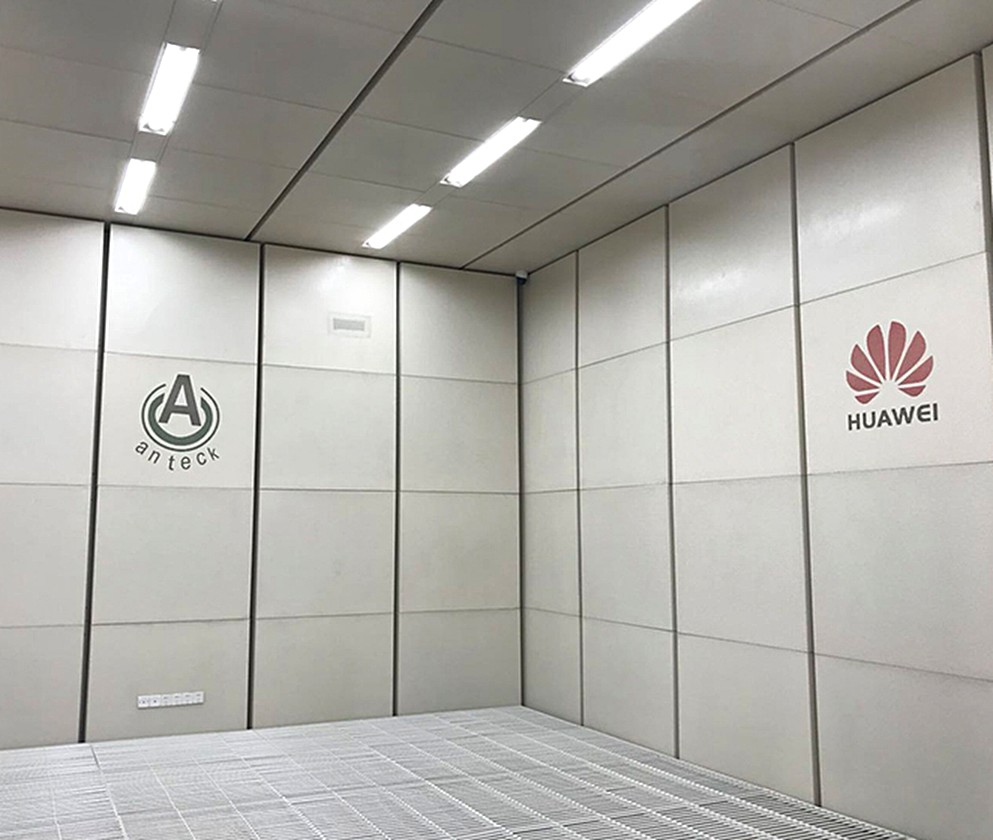
To maintain a diffuse field, the room adopts an irregular set of proportions such that no two dimensions form a whole number ratio. The walls are finished with hard reflective surfaces such as enamel, tile or copper foil, and fixed diffuser panels together with large rotating diffusers may be suspended to further improve field uniformity.
Applications
Determination of material absorption coefficients, sound power and spectrum measurement, evaluation of electroacoustic device efficiency, and noise fatigue testing of precision components.
Related Articles and Projects
Related products
Wedge Anechoic Chamber
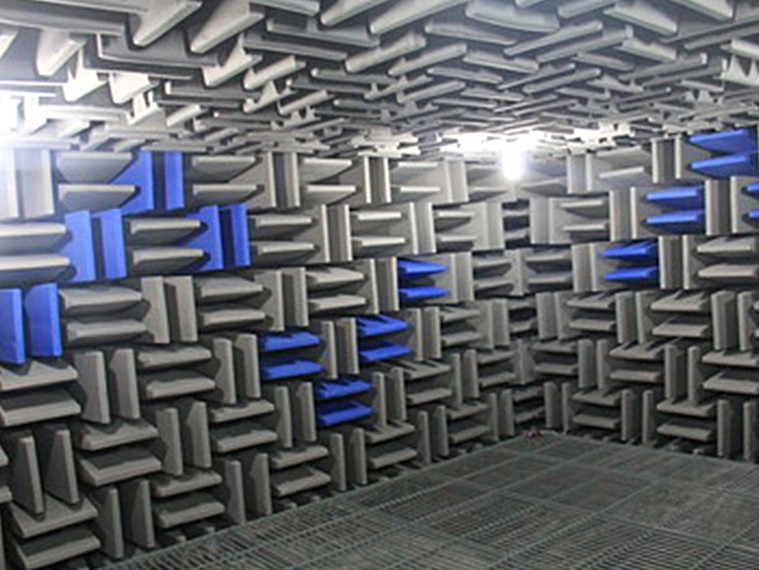
A full free field space for precise acoustic testing, offering an absorption coefficient above 99% and compliance with ISO 3745, ANSI S12.55 and GB 6882.
Learn more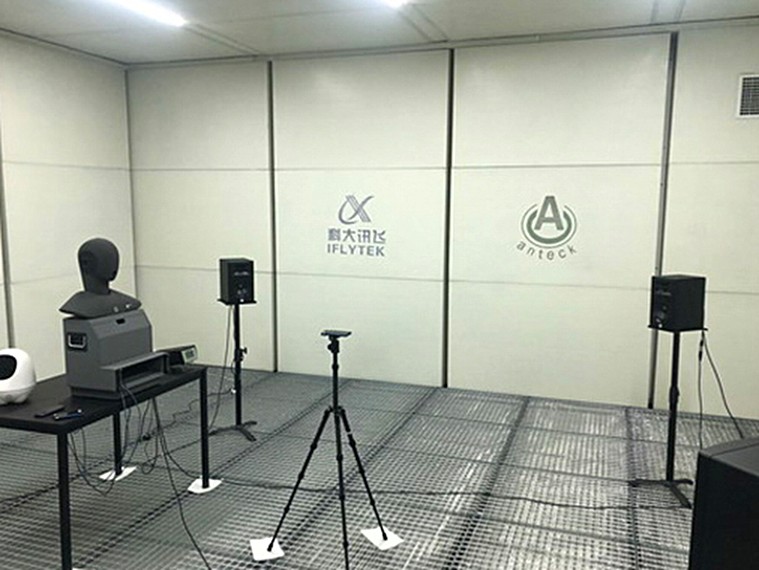
Flat Panel Anechoic Chamber
A patented flat panel absorber requiring a wall depth of only 300 to 350mm, environmentally compliant and fire retardant, preserving low frequency performance while conserving laboratory space.
Learn more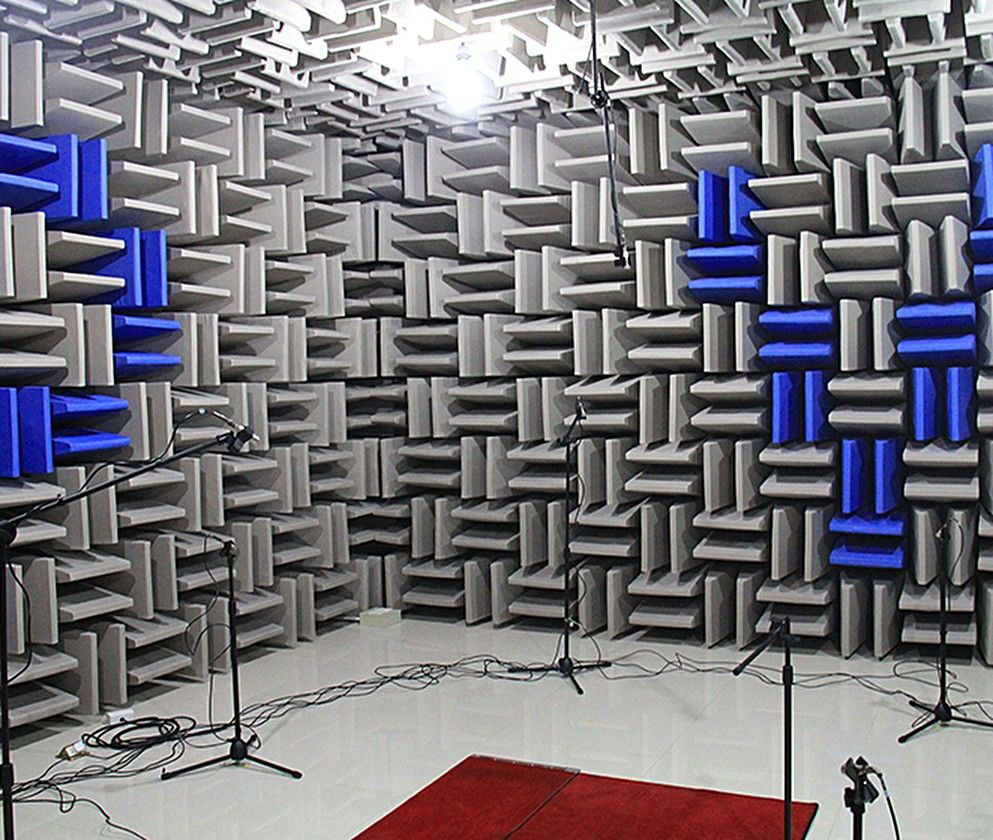
Acoustic Test Instruments
Anteck supplies nine categories of acoustic measurement instruments, comprising more than 100 models, across environmental, industrial, building and electroacoustic applications.
Learn more