
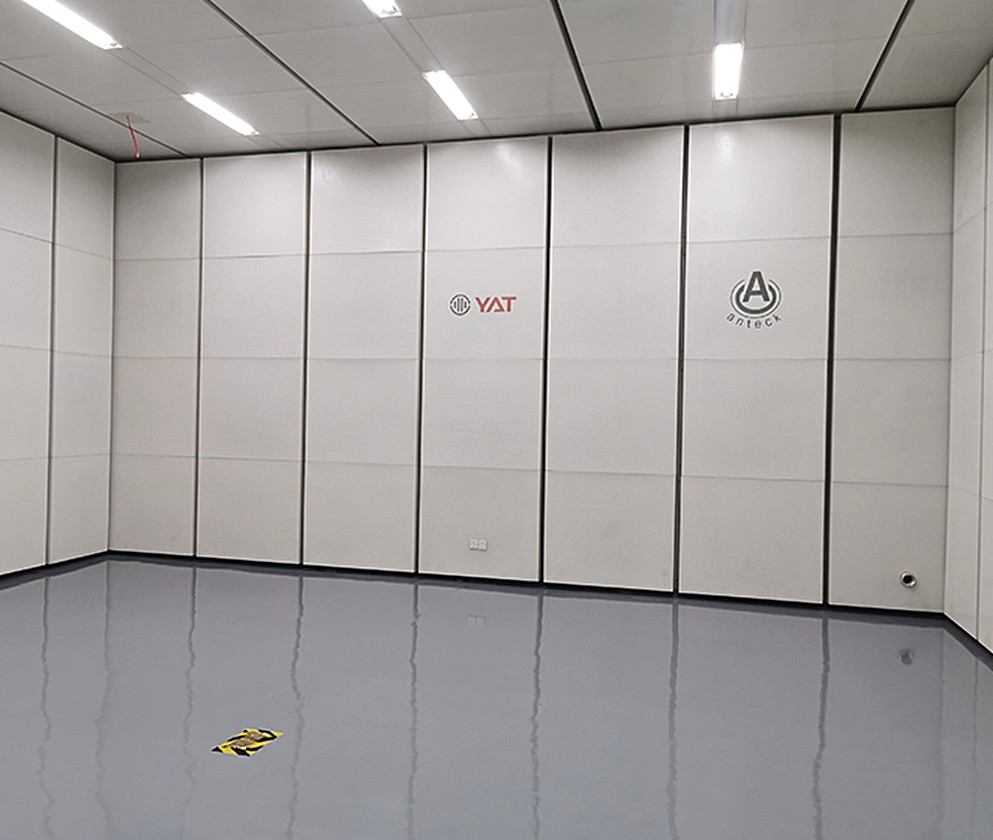
Electromagnetic shielding employs a shield constructed of conductive or magnetically permeable material to confine the electromagnetic field to one side of a boundary, so that the interior and exterior of the shielded space do not interfere with one another. It prevents external electromagnetic waves from disturbing precise measurement within, and it likewise prevents a device’s own emissions from leaking outward.
In engineering practice, the shielding effectiveness depends on the material, the structure, and the quality of the installation. The shield must remain electrically continuous and well grounded, while doors, windows, ventilation openings, and cable wall penetrations are the locations most prone to leakage and must be addressed with dedicated measures such as contact fingers, waveguide vents, and filters. If any single detail is improperly executed, the overall effectiveness is markedly reduced.
Electromagnetic shielding is frequently combined with acoustic treatment and is widely applied in test environments for electronics, telecommunications, and automotive electronics. Shielding effectiveness must be verified through professional testing, and the design and installation are therefore best entrusted to a vendor experienced in both acoustic and electromagnetic engineering.